97% of people research a moving company online before calling anyone. With 45% of all US moves occurring between May and August, the window in which your company either captures peak season demand or loses it to a competitor is narrow. The moving companies filling their schedules months in advance are not spending more on paid leads. They are ranking organically because they hired moving company SEO experts who understood the industry before they picked up the phone.
The difference between a specialist and a general agency in this vertical is not a matter of preference or budget. It is a difference in operational outcomes. Niche focused SEO agencies often outperform generalists because specialization allows a deeper understanding of audience behavior, keyword landscapes, and competitive dynamics. In moving company SEO, those dynamics include peak season timing, route specific search intent, trust signals for high stress purchases, and Google Business Profile optimization in a market where the Map Pack captures 60% of all clicks for moving related searches. A general agency rarely enters an engagement with that knowledge already in place.
This guide examines where the performance gap between specialist and generalist SEO for moving companies actually shows up and what to look for when choosing a moving business SEO specialist.
KEY TAKEAWAYS
- 97% of moving customers research online before booking. A specialist moving company SEO expert builds the search presence that captures that research at every stage, from initial comparison to final call.
- The Map Pack top 3 positions capture 60% of all clicks for moving related search queries. Specialist SEO experts for movers treat Map Pack optimization as a primary monthly deliverable. General agencies treat it as a setup task.
- Peak season rankings are built in the off season. A specialist SEO consultant for movers aligns campaign timing to the moving industry calendar. A general agency applies the same optimization cadence regardless of seasonality.
- One moving company SEO case study documented a traffic value increase from $45,200 to $553,000 after a specialist SEO program, with the client moving from rank 20 to rank 1 for their primary commercial keyword.
What General Agencies Get Wrong with Moving Company SEO
A general agency applies a standard local SEO framework to a moving company, the same way it applies it to a plumber or a landscaper. The technical work is similar on the surface: Google Business Profile, citations, service pages, and keyword research. The difference is in how deeply each element is understood and executed.
A general agency typically targets broad city level keywords: movers in Dallas, best moving company in Atlanta, local movers near me. These are the right categories of keywords, but they are the starting point, not the full strategy. Specialist moving company SEO requires a fundamentally different architecture: route specific pages for city-to-city moves, service level pages for apartment, house, commercial, and specialty moves, neighborhood pages for dense metro markets, and content that answers the specific cost and process questions that moving customers research before booking.
The second gap is review management. For moving company SEO, reviews are not just a trust signal. They are the primary Map Pack ranking input. A general agency may advise a client to ask for reviews. A specialist builds a systematic review generation workflow tied to the dispatch system, targeting the 15 to 30 new monthly reviews that sustain the Map Pack position in competitive markets.
The Seasonality Gap: Why Timing Knowledge Matters
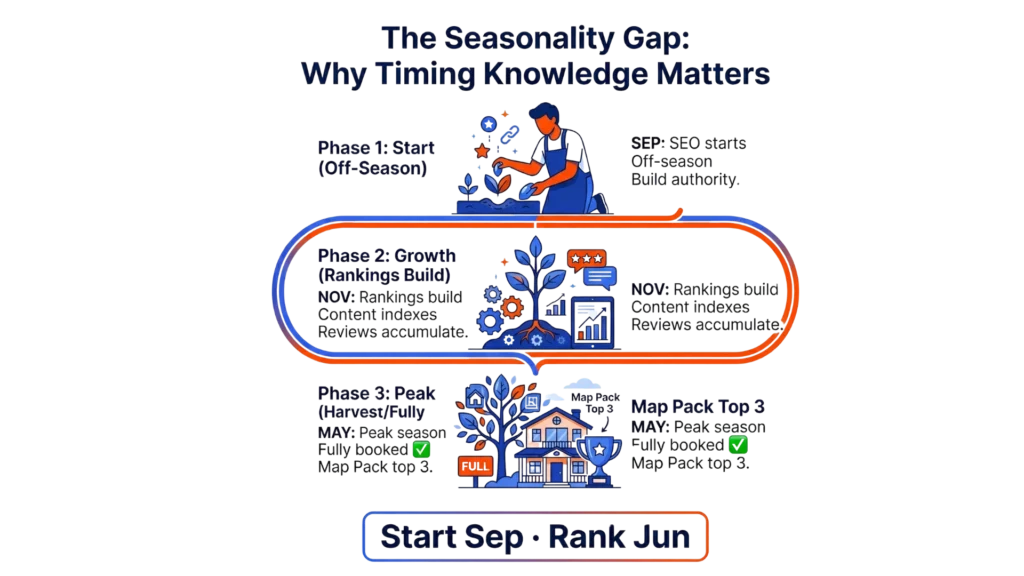
Seasonality is the most consistently mismanaged dimension of SEO for moving companies, and it is also the one that general agencies most frequently get wrong simply because they have no baseline understanding of when moving demand peaks or how early the SEO work needs to begin.
SEO work started in May will see meaningful ranking results in October or November, far too late to impact that summer’s revenue. The companies dominating peak season searches in June started their SEO programs in the previous autumn. A specialist understands this relationship intuitively because they have run moving company accounts through multiple seasonal cycles.
Where Specialist Moving Business SEO Specialists Actually Outperform
The performance gap between a moving business SEO specialist and a generalist agency is measurable across four specific areas. Each one reflects knowledge that is built through working repeatedly in the moving industry rather than knowledge that transfers from other verticals.
Route and Service Page Architecture
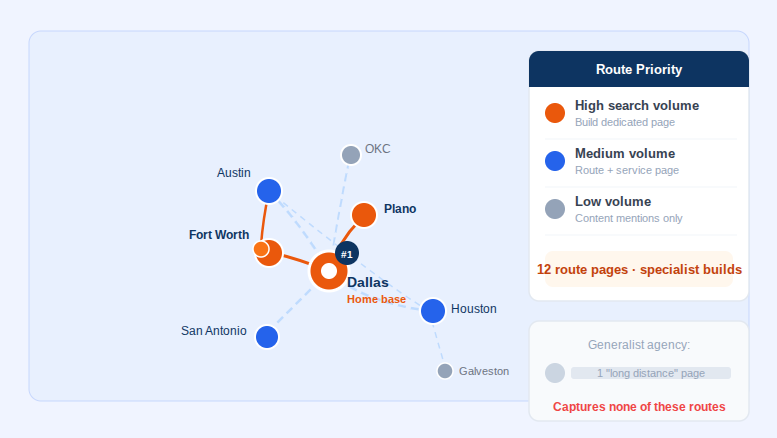
Moving searches are intent specific in ways that most local service searches are not. A customer searching ‘Dallas to Austin movers’ is not the same customer as one searching ‘local movers Dallas’, even though both are moving. Building dedicated pages for the most searched routes in a company’s service area captures high intent traffic that a generic ‘long distance moving’ page cannot rank for. This architecture requires knowing which routes generate search volume in a given market, which is knowledge that comes from moving industry experience.
Google Business Profile Depth
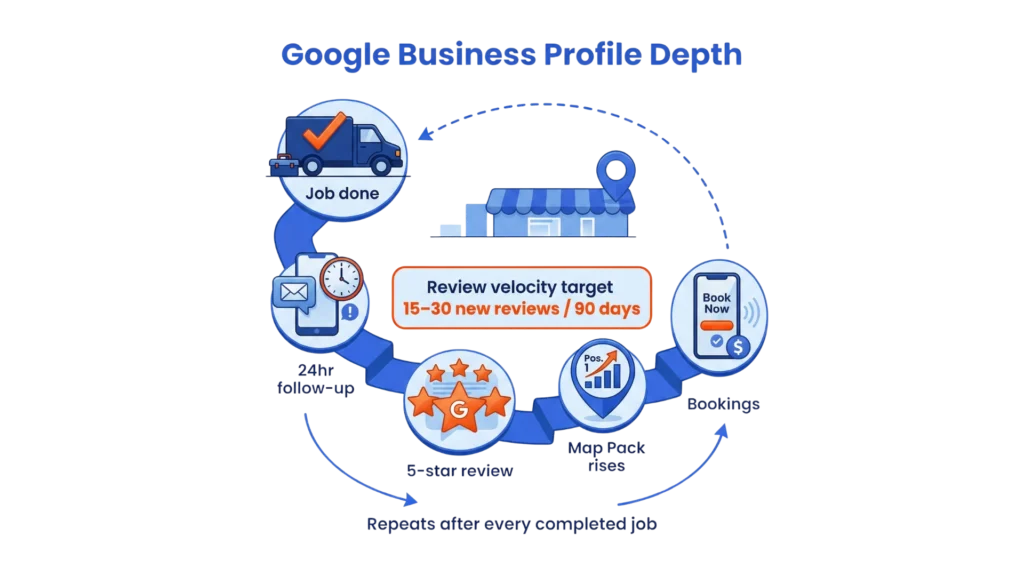
The GBP for a moving company is more complex to optimize than for most local businesses. Category selection must include primary and secondary categories for residential, commercial, and specialty moving. Service descriptions need to match the specific search terms used by moving customers, not generic service labels. Photo uploads should include real job site imagery from recent moves, which improves both GBP engagement metrics and trust conversion.
A specialist SEO consultant for movers manages GBP as an active weekly workstream, not a one time setup. This includes Google Posts for seasonal availability, Q and A management for common moving questions, and citation monitoring to catch and correct incorrect business information that competitors or customers sometimes submit.
Trust Content That Converts the Research Stage
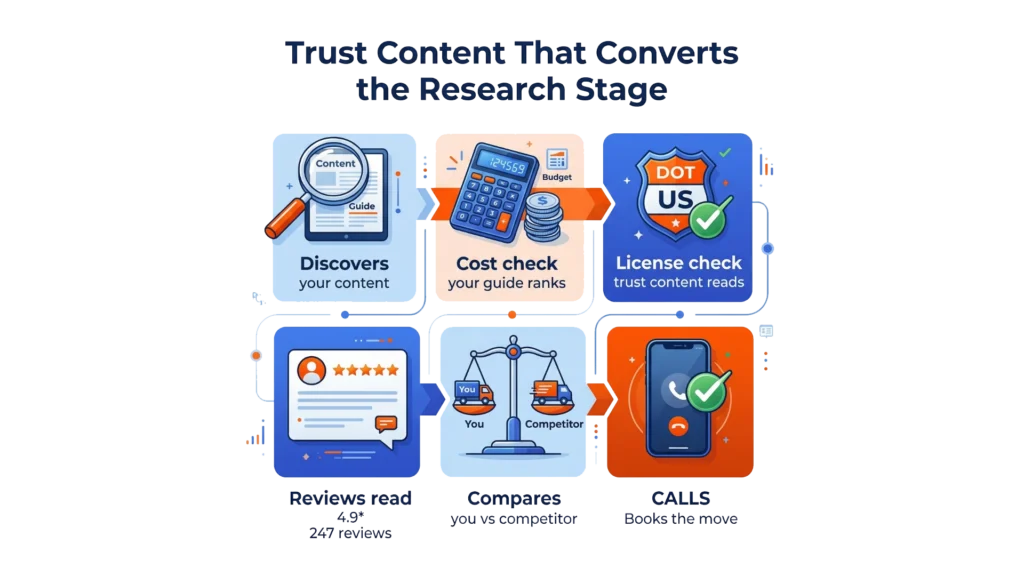
Moving is among the highest trust purchase decisions most households make in any given year. Customers research cost, process, licensing, reviews, and company reputation extensively before calling. A specialist builds the content cluster that answers those questions: how much does a local move cost in the specific city, what is included in a full-service move, how to verify a mover’s DOT license, and what to expect on moving day. This content drives organic traffic from customers 30 to 60 days from their move date and builds the brand familiarity that converts when they search again, closer to booking.
Specialist vs General Agency: What the Deliverables Look Like
When evaluating marketing for moving companies, the clearest way to distinguish a specialist from a generalist is to compare what each includes in a standard monthly deliverable set. The following table reflects what practices are common versus uncommon in each provider type.
| Deliverable | Moving Company SEO Specialist | General Agency |
|---|---|---|
| Keyword strategy | Route pages, service type pages, neighborhood pages, seasonal query clusters | City plus movers, local movers, moving company near me |
| GBP management | Weekly active management including posts, Q and A, photo uploads, category audits | Initial setup only or infrequent updates |
| Review generation | Systematic workflow tied to job completion, targeting 15 to 30 new reviews per month | Occasional reminders without a structured process |
| Seasonal campaign timing | Off-season content push aligned to peak season ranking targets | Consistent volume regardless of industry calendar |
| Local link building | Partnerships with real estate agents, relocation coordinators, apartment complexes | Generic directory submissions |
| Content topics | Cost guides, moving checklists, DOT verification, route specific content | Generic ‘how to hire movers’ posts |
| Reporting metrics | Calls per month, quote requests, Map Pack position, seasonal traffic trends | Keyword rankings and organic sessions |
The table above reflects what is standard in a specialist program versus what is typical in a general agency retainer. At Rankfast, audits of moving company accounts that previously worked with generalist providers consistently surface the same three gaps: GBP categories set to the wrong primary type, no route page architecture, and review velocity that stalled within the first three months. All three are directly addressable with moving industry knowledge and a defined monthly workflow.
What to Look for in Moving Company SEO Experts
When evaluating SEO experts for movers, the most useful questions are those that reveal whether the provider understands the moving industry specifically or is applying a general local SEO framework with moving specific terminology layered on top. The distinction becomes clear quickly if you ask the right things.
Questions That Reveal Specialist Knowledge
Ask any prospective SEO consultant for movers the following before signing:
- How do you structure your seasonal campaign calendar for moving companies and when do you recommend starting SEO work relative to peak season?
- How many route specific pages would you recommend for our service area and how do you identify which routes to prioritize?
- What is your monthly GBP management process beyond initial setup and how do you build review velocity over the course of a year?
- What content topics do you consider most important for a moving company at our stage of organic visibility?
- How do you approach local link building for a moving company and which partner types are most effective in this vertical?
A general agency will give generic answers to most of these questions. A moving industry specialist will answer them with specific knowledge of route demand, seasonal patterns, and the trust signals that convert moving customers.
What Makes Niche SEO Agencies Effective
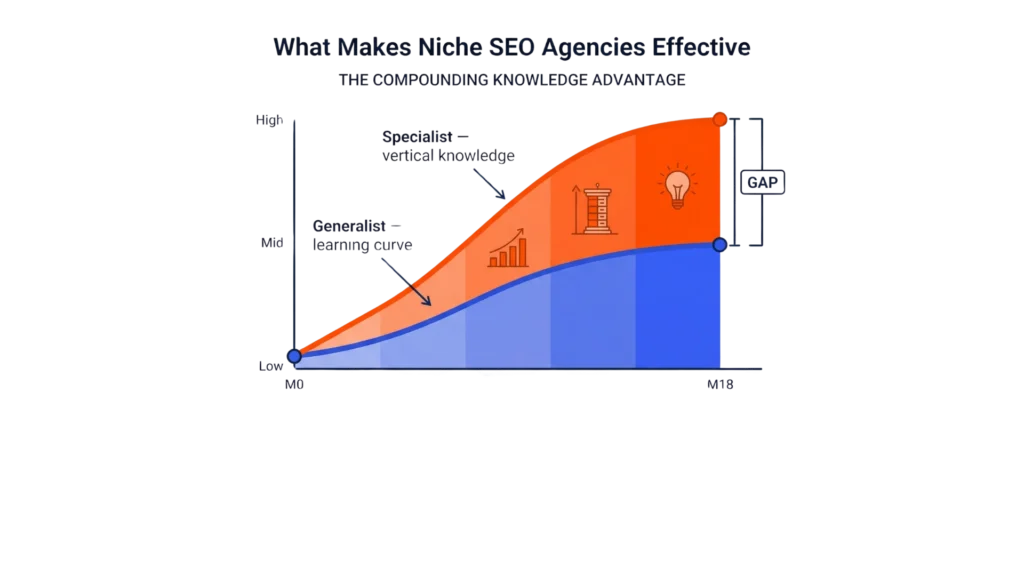
The case for niche SEO agencies in the moving industry rests on a straightforward premise: the time and cost of a generalist agency learning an industry is borne by the client. A specialist arrives with the vertical knowledge already built. They understand which keywords signal research intent versus booking intent, which GBP categories are correct for different moving service mixes, which competitor tactics work in the top markets, and how long ranking improvements take across different levels of market competition.
That existing knowledge compresses the timeline to meaningful results and reduces the number of months a practice is paying for a learning curve that produces nothing.
Choosing the Right Moving Company SEO Partner
The performance difference between moving company SEO experts and general agencies is not theoretical. It shows up in Map Pack position timelines, review generation consistency, seasonal lead volume, and the depth of keyword coverage that translates directly into booked jobs during the months that matter most.
The most important question to ask any prospective provider is not what their general SEO process looks like. It is whether they have the moving industry knowledge to make that process effective in your specific market. The answer to that question determines whether you are paying for a learning curve or a compounding competitive advantage.
Contact Rankfast for a specialist review of your current moving company SEO program and a market specific assessment of what it would take to reach and hold the Map Pack positions that drive your peak season bookings.
Frequently Asked Questions
Why does specialist SEO for moving companies produce better Map Pack results?
Map Pack ranking for moving companies depends on a combination of GBP completeness, review velocity, citation consistency, and geographic relevance signals. Specialist SEO experts for movers manage each of these as defined monthly deliverables with moving industry specific knowledge: the correct GBP categories for residential, commercial, and specialty moves, the review volume targets needed in competitive markets (15 to 30 new reviews per month), and the citation sources most relevant to the moving vertical including Angi, HireAHelper, and Moving.com alongside standard local directories.
When should a moving company start SEO investment?
Moving company SEO started in May will produce results by October or November, too late for that summer's peak season revenue. Companies that want to capture June and July demand at full capacity should start their SEO program in September or October of the previous year. This counterintuitive timing is one of the key insights that separates moving industry specialists from generalist agencies who apply a standard 6 month timeline without accounting for when the returns from that timeline actually need to materialize.
How do I evaluate a potential SEO consultant for movers?
Ask them to describe their seasonal campaign calendar for moving companies and when they recommend starting investment relative to peak season. Ask how they structure route page architecture and how they identify which routes to target in your specific market. Ask what their monthly GBP management process includes beyond initial setup. Ask for references from moving company clients specifically, not just local service businesses in general. A provider who cannot answer these questions with moving industry specifics is applying a general framework, not specialist expertise.